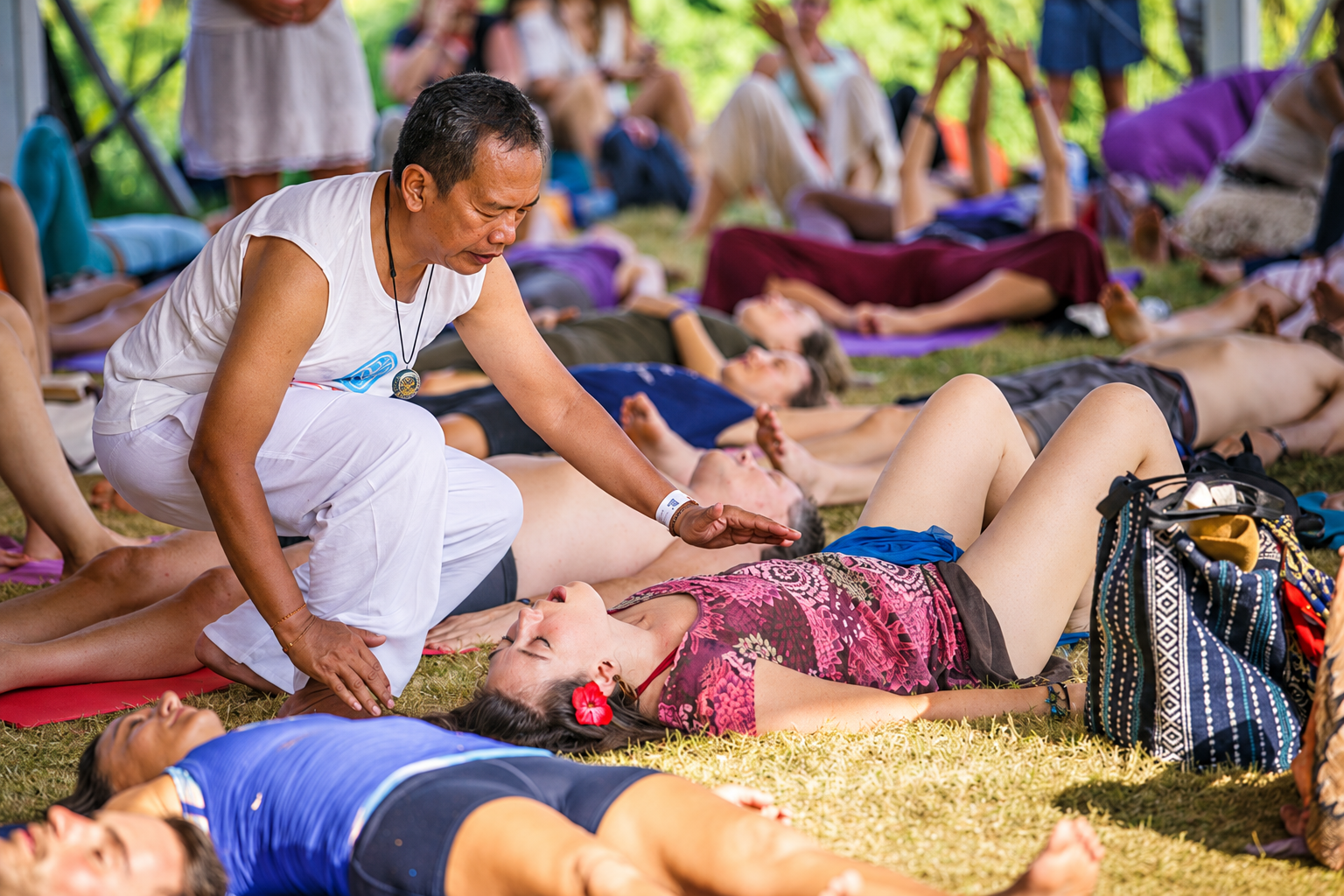
Add Breathwork for Recovery to your schedule. We bring guided, 35-minute recovery sessions to your location, giving members a reason to stay engaged beyond their usual workout.
Through guided breathing, body awareness, and rest, members practice releasing built-up strain and shifting from physical effort to the demands of the day.
Breathing runs automatically. It also gives us a way to influence how we feel.
In a month-long randomized study, five minutes of daily breathwork—particularly exhale-focused cyclic sighing—improved mood and reduced breathing rate more than mindfulness meditation.
Our approach gives members time to develop that overlooked skill: recognizing effort, adjusting their breathing, and learning how to settle.
THE OFFERINGS
Two ways to work with the breath.
Different intensities. A considered structure for each.
01 / RECOVERY
GENTLE PRACTICE35 MINUTES
Breathwork for Recovery
Make recovery part of the routine.
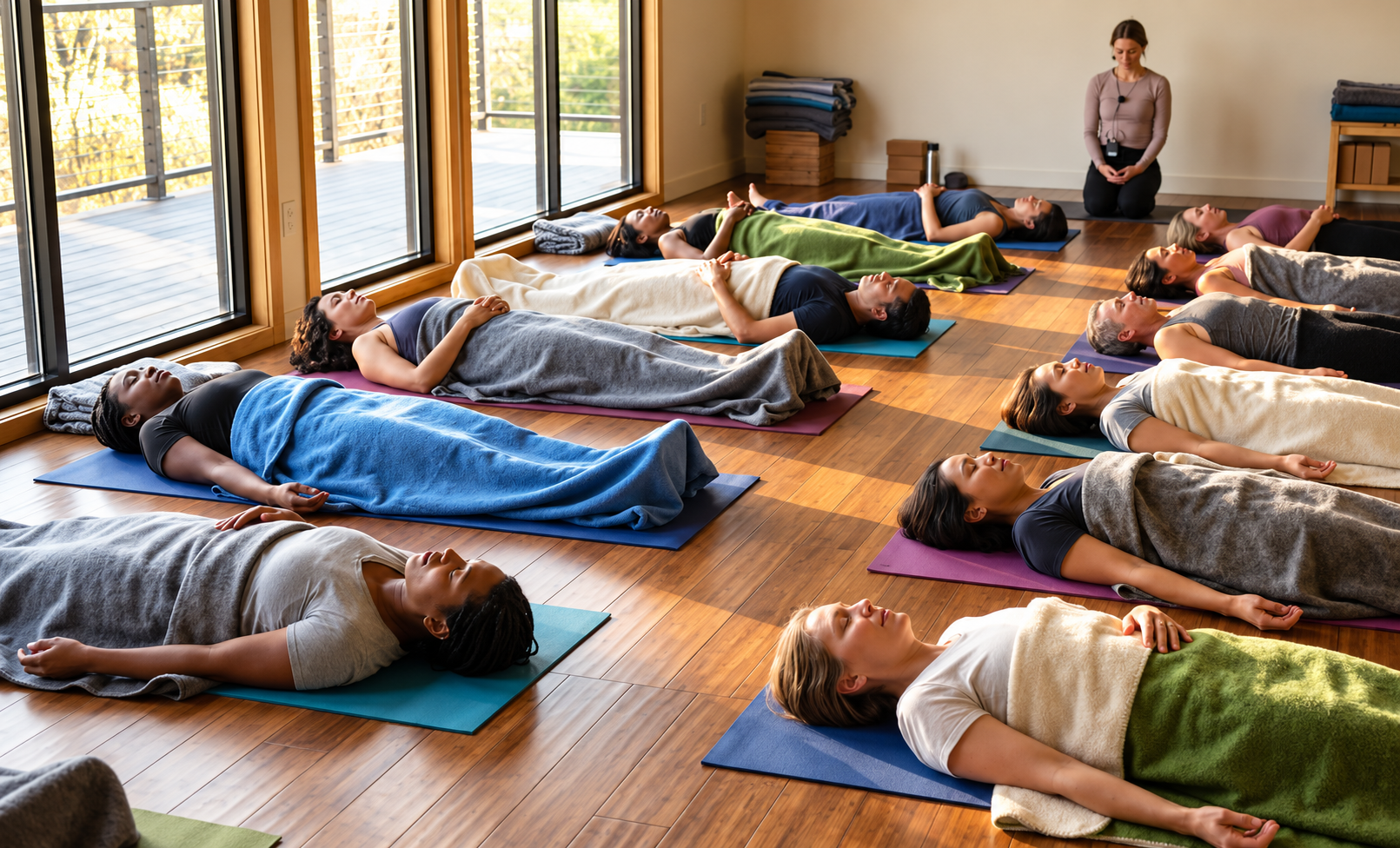
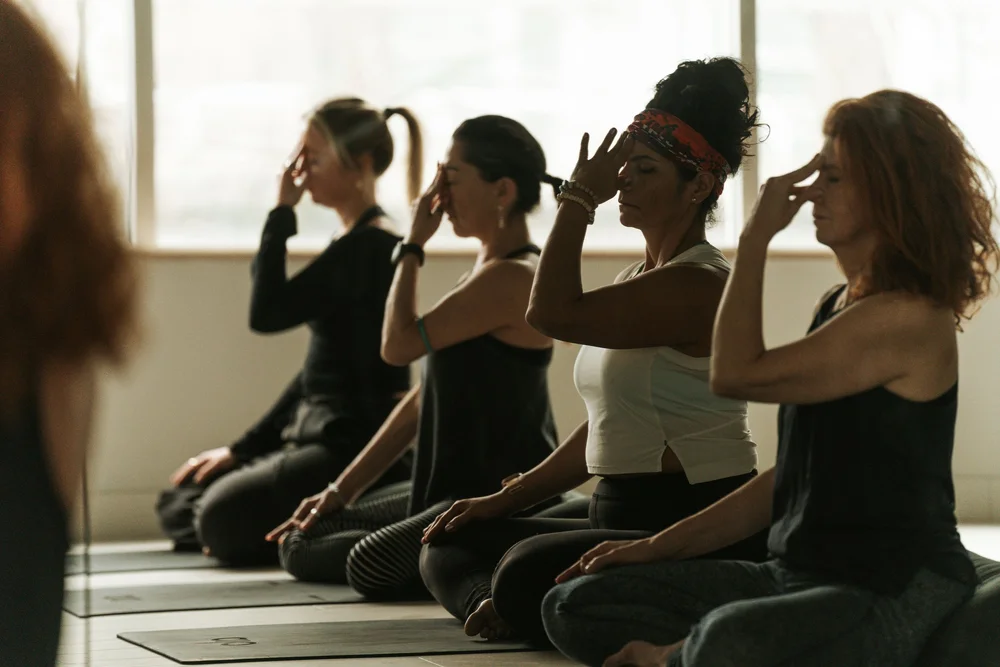
A guided transition from physical effort into the rest of the day—or a dedicated practice on a rest day. Breathing, body awareness, and quiet rest give members time to notice built-up strain, ease unnecessary tension, and settle.
Includes introduction, guided practice, and closing. Participants can practice on a mat or in a chair.
An intensive breathing practice combining active breathwork, music, and guided visualization. Members explore physical sensation, mental patterns, and emotion, with time afterward to settle and reflect.
The muscles that power breathing are trainable. Research on targeted respiratory muscle training shows that appropriate, repeated loading can build breathing strength and resistance to fatigue—a useful dimension of physical conditioning.
That research concerns targeted muscle-training protocols; it does not establish strength gains from this class. Read the study ↗
This standalone class requires advance screening. Participants can reduce intensity or pause throughout.
Your business receives one free introductory session of each offering.Book Free Intro ↗
THE SESSION, AT A GLANCE
A clear structure. From arrival to return.
Breathwork for Recovery
35 MINUTES
01Settle
02Breathe
03Rest
04Return
A guided transition from the workout into the rest of the day.
Breathwork for Workout
60 MINUTES
01Arrive
02Breathing Warmup
03Six Stages of Active Breathwork
04Culmination
05Wind Down
06Settle
07Reflect & Close
THE PEOPLE HOLDING THE ROOM
Deep expertise. The right person for your space.
A team of facilitators. A considered match for your business.
Every facilitator is a certified yoga teacher experienced in pranayama, with training and certifications in Holotropic Breathwork, Wim Hof breathing practices, Qigong, and health coaching.
We match your business with a facilitator based on location, availability, and the session you request. The practitioner may change; each session follows the structure of your chosen offering, with clear guidance, participant choice, and time to settle before closing.
Before your session, we introduce your facilitator and share their relevant background and qualifications.
RESEARCH ALONGSIDE PRACTICE
The practice. The data. The longer view.
STUDY UNDERWAY
We’re inviting interested members to a study that analyzes wearable tracker data alongside environmental conditions.
Wearable readings are part of the picture. Including environmental factors gives us more context when we look at patterns in how people respond to exercise.
01 / WHAT WE’RE STUDYING
Wearables + environment.
Our current study brings wearable measurements and environmental conditions into the same analysis. We’re exploring how these patterns relate to workout outcomes.
02 / LOOKING FURTHER AHEAD
Breathwork over time.
As we continue working with facilities, we plan to invite interested members into a study on the long-term effects of regular breathwork practice.
03 / FOR PARTICIPATING FACILITIES
Monthly research updates.
Our research collaborators share monthly updates with participating facilities, including short summaries you can share in member newsletters or social posts.
01 / COLLECTYour wearableAvailable measurements
02 / ADD CONTEXTEnvironmentConditions alongside the data
03 / ANALYZEPatterns over timeAcross sessions & daily life
Future breathwork research might look at sleep patterns on days when an evening workout is followed by Recovery breathwork. Environmental conditions and other factors would need to be considered when interpreting the pattern.
Look across repeated days, rather than judging one session.
ILLUSTRATIVE SLEEP TREND2 WEEKS
Example sleep patternWorkout + Recovery day
Illustration only. No actual study results or measured values are shown. Patterns can inform questions; they do not establish cause.
↳ Research participation is optional. Members can attend every session without sharing wearable data.
Independent published studies provide context for the questions we’re exploring.
01
MOOD & REGULAR PRACTICE
Breathing practice and mood.
In a month-long randomized study, five minutes of daily breathwork—particularly exhale-focused cyclic sighing—improved mood and reduced breathing rate more than mindfulness meditation.
A small controlled trial in trained cyclists found that six weeks of targeted inspiratory muscle training improved breathing-muscle function and cycling performance. The protocol used resistance-based training, a distinct approach from guided breathwork.
In a trial of 200 adults, three weeks of intensive breathing with breath holds and a gentler breathing comparison both improved reported stress. The intensive approach showed no significant advantage—one reason to study outcomes rather than judge a practice by how powerful it feels.
Message us on Telegram with your location, expected group size, and preferred dates.
02
Try both offerings.
Start with two free introductory sessions: Breathwork for Recovery · 35 minutes, and Breathwork for Workout · 60 minutes.
03
Build your schedule.
Continue with regular sessions, a series, or occasional events. Ongoing sessions are quoted for your location, group size, and schedule.
BEFORE WE BEGIN
A few things to know.
Do members need experience?+
No. Both sessions welcome adult beginners. Facilitators explain the practice and guide participants throughout.
Which session should we choose?+
Recovery is a gentle, 35-minute practice for after exercise or a rest day. Workout is a more intensive, 60-minute experience combining active breathing, music, and visualization. We check in with every participant before Workout to discuss readiness and individual considerations.
Can participants adjust the intensity?+
Yes. Participants can ease off, return to ordinary breathing, or pause at any point.
Do members need a wearable?+
No. Wearables are only relevant to the optional wearable-data study. Members can attend either session without a device or sharing data.
RECOMMENDED READING
Read beyond the session.
Three perspectives on breathing, performance, and inner exploration.
01 / A STARTING POINT
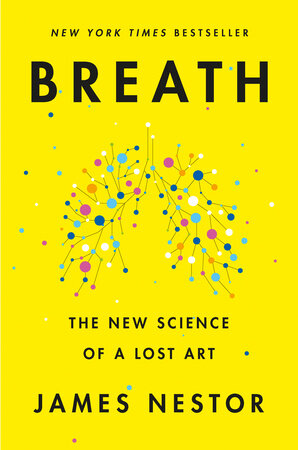
Breath: The New Science of a Lost Art
James Nestor
A journalist’s exploration of breathing science and traditional practices. An engaging starting point for questioning an everyday habit we rarely examine.
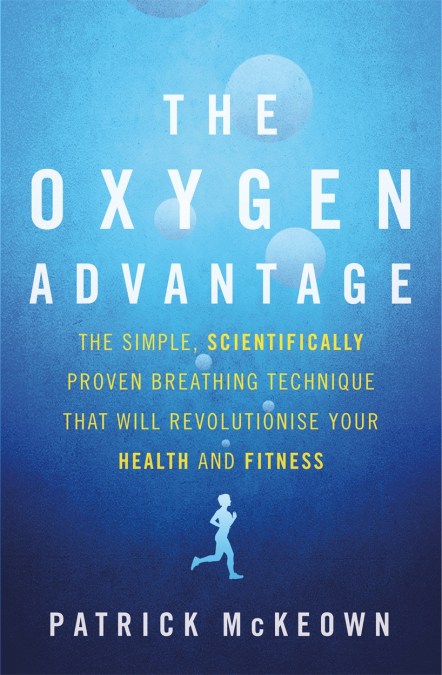
A practical introduction to functional breathing, nasal breathing, and breath training in exercise. For readers interested in the relationship between breathing habits and physical performance.
Holotropic Breathwork: A New Approach to Self-Exploration and Therapy
Stanislav Grof & Christina Grof
The method’s founders examine how breathing, music, and setting shape intensive inner exploration. For readers curious about the experiential tradition behind this work.
 01 / RECOVERY